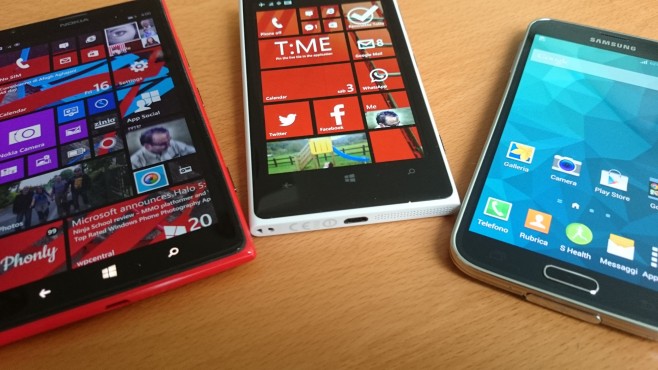
 The terminals Lumia – Microsoft (formerly Nokia) have always been characterized by the quality of imaging. The physical characteristics of the optical system and algorithms Pureview (the Lumia so equipped) are points of reference for appasisonati around the world. It is no coincidence that around the end Lumia, have sprung up on the internet so many enthusiastic community of fans of the Mobile photography . The published pictures are usually of high level (although almost always made by non-professionals) to testify to the goodness of the adopted technologies. However, the ‘ mobile imaging is no longer a feature which only the tip line with Microsoft technologies and Nokia Lumia. Sony before and Samsung after (especially thanks to the terminals newer) are two brands that are focusing on this feature.
Object this test is just to compare the technology Pureview expressed by Lumia Lumia 1020 and 1520 with a terminal Android widespread and well known, the Samsung Galaxy S5.
Introduction
This test relates only to the photographic characteristics. Of course, not only camera you live on this and each user will be able to set and understand the differences between the terminals. The Lumia Windows Phone mount it (the test was carried out with version 8.1 of the firmware imaging specific + Black) and the Samsung Galaxy S5 is an Android smartphone. Very different systems, not only for the camera. We see the photographic characteristics of the various terminals:
Samsung Galaxy S5
Samsung has worked a lot on the camera’s Galaxy S5 . The sensor is 16 megapixels, f / 2.2 (equivalent to a focal length of 31 mm., And is larger than the one mounted nell’S4 (not by much though). Samsung did not use more sensors produced by SONY and has S5 product directly to the sensor which is characterized by its particular structure, called ISOCELL.
The mechanism of ISOCELL system is quite complex in terms of hardware (at Samsung if it is a description not very clear). From the user side the new sensor acquisition allows you to raise the ISO value (sensitivity) during shooting, without introducing additional noise in the image digitally. E ‘is well known that a high ISO value allows better pictures in less than optimal light conditions, but at the cost of amplifying (and often much) the “artifacts” due to digital riumore. S5 is not equipped with optical stabilization (OIS ) and a terminal end of this omission Could be heavy.
Another important feature of S5 is the so-called “phase detection focusing” . It is a different method of focus that does not stop only to analyze the contrast between the areas of the image (as is the case for all other autofocus systems).
phase detection focus requires a separate hardware and is directly derived from technology found in many DSLR. In reality this CHARGING METHOD focus (which breaks down the fire in various parts of the image) has been implemented in cameras (including compact) up from 2010 and the first model to use is (as I understand it) the FujiFilm FinePix F300EXR . The image acquired by the sensor of Galaxy S5 is filtered and processed progressively from 6 different curvature lenses (plastic). When the system (by analyzing the 6 images) believes it to be “in phase” takes as the proper focus and “shoot” photography.
The fact that this system works better (or worse) of the system Autofocus traditional (based on the contrast of the images) you could write a treatise, but we move on to describe the features of the two contenders Windows Phone.
Lumia 1020
Terminal presented as the re mobile imaging , not without reasonable grounds. First Windows Phone terminal to push hard concept called “Pureview”, the imaging system (declined variably on different terminals) of Nokia that – in the case of 1020 – is composed of a sensor of exceptional size for a smartphone: 1 /1.5 “type of Back Side Illuminated (BSI) with an excellent value of f / 2.2 (eqiuivalente focal length to 26mm.)
The characteristic” hump “of this terminal, probably makes little to aesthetics , but it is a statement of superiority. A sensor of this size is dimensionally “photographic” and requires adequate space. Lumia 1020 optical stabilization (OIS) into hardware, a flash-type dual LED / Xenon and especially promises to revolutionize the way we take pictures with smartphones thanks to the “cropping” and all’oversamling.
The scanning resolution is in fact so high (41 megapixel) to allow the user to obtain photographic images simply “cutting out” various portions of the same shot directly into the terminal. Lumia 1020 can also shoot in RAW format and automatically saves two versions of the same image, a full resolution (for special uses, such as the aforementioned “cropping”) and a 5-megapixel excellent for all other uses. Finally we mention the ZEISS optical lenses with 6 glass suspended system (OIS) of great quality.
Lumia 1520
Terminal size definitely important almost a tablet thanks to the screen 6 “that you love (or hate) just for this feature. The optical Pureview 1520 is lower (slightly) only to his brother Lumia 1020 The room 1520 was in fact a resolution of 20 megapixels that still allows you to operate with cropping and oversampling, although obviously in origin you will have fewer pixels on which to work. The sensor (type BSI) is smaller than that of 1020 with its 1 / 2.5-inch. The other features are f / 2.4 (eqiuivalente focal length 26mm), and optical image stabilization (OIS). The flash is a dual LED and Xenon component is absent.
Lumia 1520 can shoot in RAW format and automatically saves two versions of the same image. A full resolution (for special uses, such as the aforementioned “cropping”) and a 5 megapixel camera for all other uses. ZEISS optics with glass lenses suspended system (OIS).
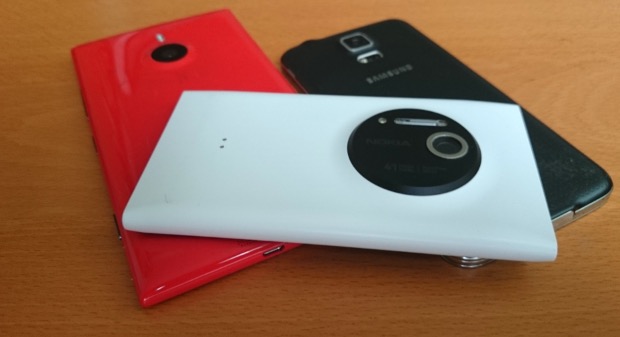 The comparison is made with a series of shots where – unless otherwise indicated – S5 is the first step 1020 the second and the third 1520 – shots were made with the native application of each terminal to values of default, a brief comment is directly below each group of images. A note on the size of the file. The Lumia save two images for each photo. A 5 megapixel (3072 x 1728 pixels) and a resolution of the sensor (7712 x 4352 pixels) to 38 megapixels in 16: 9. There is talk of an image-based 270 cm. Huge. S5 acquires images of equally generous in size with 5312 x 2988 pixels.
Colors and first appoccio to zoom in terminal
Samsung Galaxy S5
Nokia Lumia 1020
Nokia Lumia 1520
In the case of Lumia, as mentioned, have been used images from 5 megapixels. Those at higher resolution are too large to upload to WordPress. For reference, since the shots at full resolution, you get a cropping pixel real like this:

Lumia 1020 crop at actual pixels in the image at full resolution
We see the actual pixels crop of the same shot to run with S5:

Galaxy S5: crop at actual pixels in the image at full resolution
Returning to the set of the first comparison, the terminals are doing well in the initial shot. There are differences in the treatment of light and it is no surprise that the shot of 1020 is brighter. For the rest there are slight differences in color yield, but it is known that each terminal manages the white point otherwise. Moreover, let us not forget that all the shots were made to the default values .
Until the first shot, opening it and watching as the iron grate in the ground, known as the 1020 “affect” best metallic texture, a sign that from a 38 megapixel image to obtain a 5 serves to keep the detail. Lumia 1520 follows with a slightly lower. The shot shows a detail of S5 less “impacted” but it is a picture of all respect.
If you look at the third step – the maximum allowed zoom in phase – is known as the Lumia does not allow to go beyond the value of the “physical” to enlarge. The images produced by the Lumia are better because they were obtained from actual pixels (from an image by 38 or 20 megapixels in the case of 1520) but less enlarged, while S5 allows the user (willing) to zoom freely up to go to the full interpolation . The pixels in this case will be purely “invented” by the terminal software.
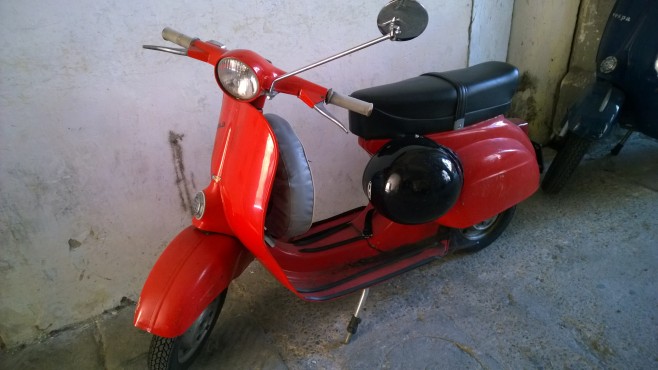
Capture standard remote media
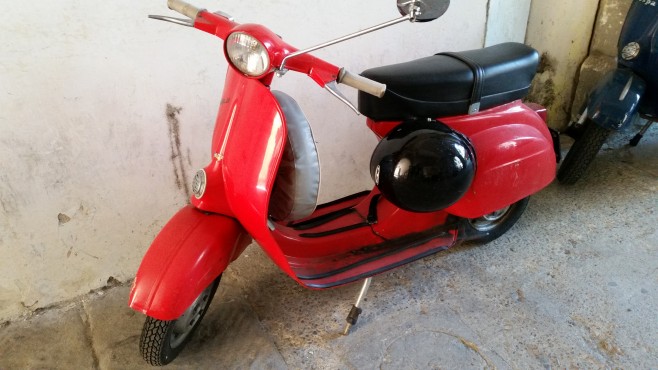
Samsung Galaxy S5
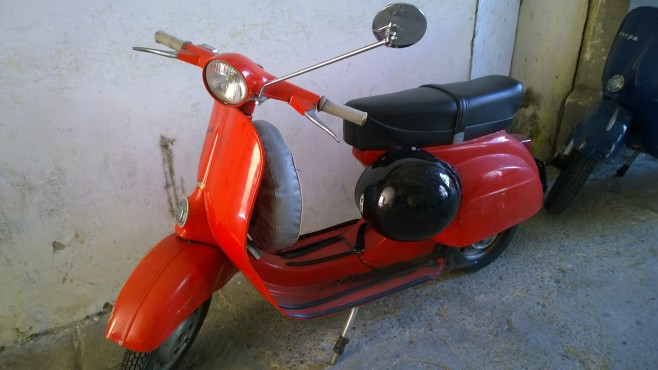
Nokia Lumia 1020
Nokia Lumia 1520
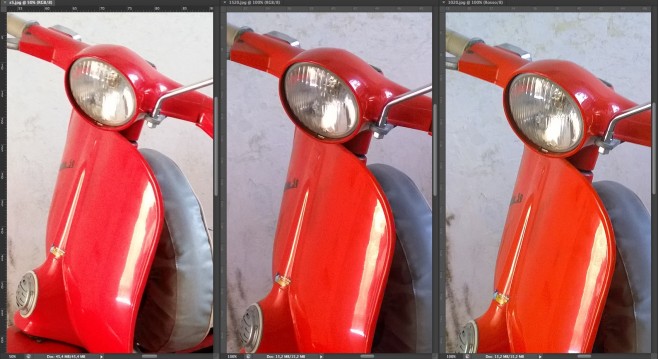
Almost a repilica the first set. To see and understand the difference suggest you look at the detail of the headlight and the texture on the wall. The images taken with the two Lumia (right) are more detailed.
Portrait and mean field in full sun
Two images per terminal. A classic portrait and a scene environment, both in full sun. Very bright light then, a condition always difficult.
Samsung Galaxy S5
Nokia Lumia 1020
Nokia Lumia 1520
The sun on your face too lightens the skin on all terminals, “burning” the image. You can see clearly the areas of the face completely white, which did not remain in any pixel. In S5, the facial skin is so “destroyed” so it looks like plastic. And even if you look at the long shot, the sky in the background in step S5 has disappeared completely.
Maximum Zoom
Image taken, then enlarged and saved directly in the terminal, using the normal editing software provided by the manufacturer.
Samsung Galaxy S5
Nokia Lumia 1020
Nokia Lumia 1520
Even in this shot, that is what was said just above. The Lumia has a constraint to the actual pixels that prevents excessive degradation, which is part of the system Pureview.
Photo of the day, panorama and detail
In this case you can make yourself an idea. We have already defined the parameters on which to judge this set.
S5 – night

1020 – Night

1520 – night
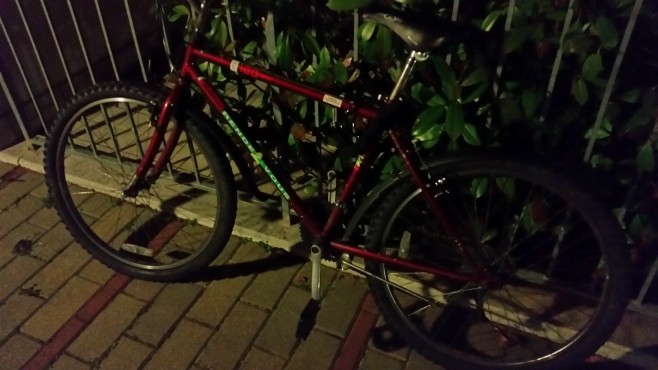
It is clear in this set optimization greater than the Lumia device in 1020 when the 1520 follow. The greater illumination produces a better scene, also for what concerns the focus.
Definition and detail
A test where the three terminals out all our heads held high. This is the rest of 3 optics of great quality. Observe the details in shots like these demonstrates the importance of having a large amount of information captured. If it is true that megapixels are not everything, it is also true that if we are … it is better .
Video
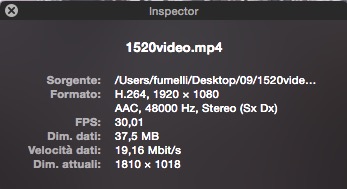
A test for the sector video. Galaxy S5 goes to capture video in 4K . Functionality which honestly is not currently clear to all, the actual usefulness. The two Lumia acquire the format FullHD up to 30 fps with a very high quality anyway.
Lumia 1520 has an interesting peculiarity. Captures audio with 4 microphones HAAC able to give direction and to avoid distortion, but eliminates the sounds that come from behind the point of recovery. Lumia 1520 is the terminal suitable to carry it behind a rock concert since – along with 1020 – (which still has a segment of audio recording below) can record audio without disorsioni up to 140 db . A threshold really high, that of a jet that is detached from the ground.
The following 3 links to short video placed on Youtube. Even if you are not an optimal test – listening in headphones – you can get an idea of the sound quality, which can overcome the compression of Youtube. Even in the movements of the stabilization hardware Lumia produces its benefits.
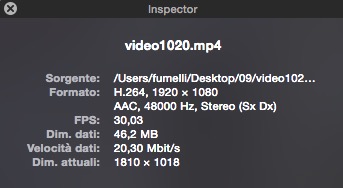
The data for the 3 videos. The value of data rate is the value you note , is less than in S5 and this is most likely due to the audio to that video.
 Samsung Galaxy S5
Nokia Lumia 1020
Nokia Lumia 1520
Conclusion
The acquisition system of the Lumia returns in 1020 bigger pictures, better lit and detailed (also in the reduced 5-megapixel) . images taken in 1020 are almost always higher than what was possible with the other terminals. The possibility of crop images from photographs already acquired sets the rest of a new method of image generation, obtained via “zoom & amp; crop “from existing shots.
1520 Lumia not get to much . He has a great perspective but always seems to generate more noise. Likely that much depends on the expectations, if 1520 does not have a bad camera, but obviously suffers from the comparison with the “brother” 1020
Being less talented – both with regard to the capture of the light of the resolution – does not reach the results Lumia 1020 but honestly for “normal” users and not fixed to mobile imaging – may be a viable alternative if you’re looking for a great and very nice.
Samsung has worked very well with S5 Galaxy and even though in some individuals (especially close) the system focus of S5 seems to have some difficulties, we are usually faced with a large optic. Unlike the Lumia, quite slow during shooting, is shooting S5 is lightning and for many users this may already be a significant advantage. S5 is not up to Nokia to compete with the two terminals when the light decreases. In this case, the lens has its limitations that lead S5 in the ranks of “normal” smartphone.
In conclusion we can say that between 1520 and Lumia Samsung Galaxy S5 the differences are not so marked, 1020, however, is different. Probably the only terminal worthy of competing with Lumia 1020 to the end may be the Nokia 808, which, however, is now out of production. Of course, it must be said that in normal conditions terminals such as Samsung Galaxy S5, Sony Xperia Sony Xperia Z1 or Z2 can rival, but rarely win.
But Nokia – now – is Microsoft, and it is not certain that the new strategy American can (and knowledge) to enhance device so specialized as the Lumia 1020, which have already been put in “End Of Life”. At the moment in Redmond are dedicating themselves to attack more down range and – after devouring Blackberry – the push is on terminals lowcost.
We hope instead that Microsoft does not want to underestimate and take advantage of men and technologies that have been able to design and implement the system Pureview. We look forward to the next terminal tip, the replacement for 1020, because Nokia has always been at the forefront in mobile because the competition, after all, is the soul of the market. The thousands of layoffs former Nokia employees – just announced – but we do not bode well.


No comments:
Post a Comment